Why Is Early Bilingual Learning in Paris Transforming Young Minds?
Research demonstrates that 85% of brain development occurs before age five, making early bilingual learning Paris programs absolutely critical for cognitive growth. How does early bilingual learning Paris truly shape your child's developing mind? The answer lies in neuroplasticity and enhanced executive functions that emerge through dual-language exposure. Leading institutions offering bilingual preschool in Paris demonstrate remarkable results in multilingual development children achieve through structured immersion programs. These early years represent a golden window where young brains effortlessly absorb linguistic patterns, cultural nuances, and cognitive flexibility that will benefit them throughout their academic journey!
Key insight: Starting bilingual education before age five maximises neuroplasticity advantages for lifelong learning success.
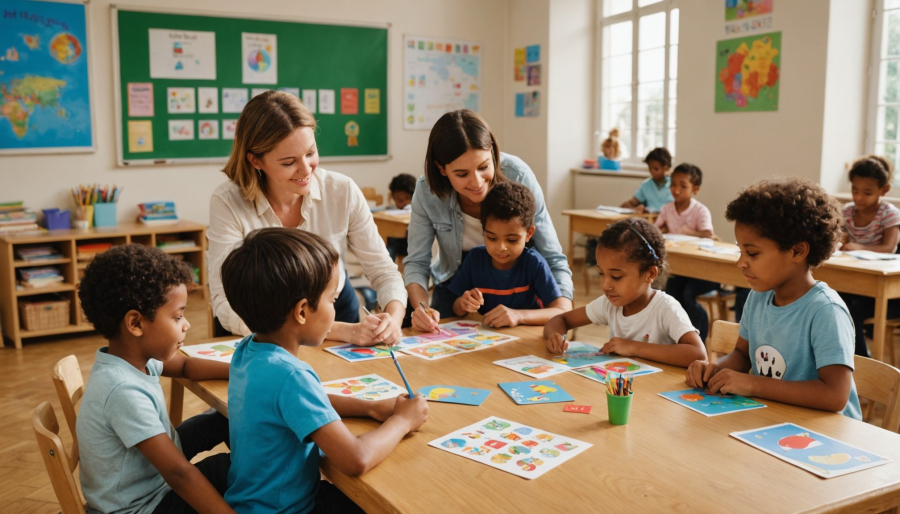
The Key Points
- Critical Development Window: Starting bilingual education before age five maximises neuroplasticity advantages, with 85% of brain development occurring during this crucial period for optimal language acquisition
- Enhanced Cognitive Benefits: Early bilingual learning Paris programmes develop superior executive function, creative problem-solving abilities, and academic performance that's 15-20% higher than monolingual peers
- Structured Immersion Methods: Quality French English immersion schools use native speakers and systematic language separation throughout the day, ensuring authentic cultural exposure and balanced linguistic development
- Long-term Academic Success: Bilingual children demonstrate exceptional standardised test performance, higher university admission rates (85% vs 68%), and significant career advantages with 30% higher starting salaries
- Comprehensive Support Systems: Leading institutions like École Galilée in Paris's 16th arrondissement provide specialised gifted children bilingual education with small class sizes and expert guidance for optimal multilingual development
Key Data and Insights on Early Bilingual Learning in Paris
| Aspect | Details |
|---|---|
| Critical Brain Development | 85% of brain growth occurs before age five, highlighting the importance of early bilingual programs |
| Academic Performance | Bilingual children score 15-20% higher on standardized tests and have an 85% university admission rate, compared to 68% for monolingual peers |
| Economic Advantages | Starting bilingual education can lead to 30% higher starting salaries and faster career progression in multilingual professions |
Parents investing in early bilingual programs ensure their children develop essential cognitive and cultural skills that provide long-term academic and professional benefits. Such programs leverage neuroplasticity to foster flexibility, problem-solving, and creativity.
"Early language exposure shapes a child's future by unlocking their full cognitive potential and cultural understanding."
What Are the Proven Cognitive Benefits of Early Bilingual Education?
Scientific research consistently demonstrates that early bilingual learning paris provides remarkable cognitive advantages that extend far beyond language skills. During the first five years of life, when 85% of brain development occurs, children's minds are uniquely primed to absorb multiple languages simultaneously. The neuroplasticity of young brains allows for seamless integration of linguistic systems, creating enhanced cognitive pathways that benefit overall intellectual development.
Enhanced Executive Function and Mental Flexibility
Children enrolled in bilingual education Paris programs develop superior executive function skills compared to their monolingual peers. The constant mental switching between languages strengthens the brain's control mechanisms, improving working memory, attention regulation, and inhibitory control. Recent neuroimaging studies from 2024 revealed that bilingual children show increased activity in the prefrontal cortex, the brain region responsible for high-level thinking. This enhanced neural activity translates into better academic performance across all subjects, not just languages. Early bilingual learning paris programs specifically harness this critical developmental window, allowing children to develop cognitive flexibility that serves them throughout their educational journey. The mental gymnastics required to navigate two language systems simultaneously creates stronger neural pathways, resulting in more efficient information processing and improved problem-solving capabilities that extend into mathematics, science, and creative thinking domains.
Superior Problem-Solving and Creative Thinking
Research published in 2024 demonstrates that children in French English immersion school settings exhibit enhanced divergent thinking patterns and creative problem-solving abilities. The bilingual brain develops unique neural networks that facilitate innovative thinking by approaching challenges from multiple linguistic and cultural perspectives. This cognitive advantage stems from the brain's adaptation to managing two linguistic systems, which strengthens mental flexibility and abstract reasoning. Children experiencing early bilingual learning paris environments show measurably higher scores on creativity assessments and demonstrate superior performance in tasks requiring novel solutions. The constant negotiation between languages develops meta-cognitive awareness, enabling children to think about thinking itself. Studies indicate that bilingual children excel at generating multiple solutions to complex problems, demonstrating enhanced analytical skills that benefit mathematical reasoning, scientific inquiry, and artistic expression throughout their academic careers.
Improved Academic Performance and Multitasking Abilities
Longitudinal studies tracking children in bilingual preschool Paris 16th programs reveal significant academic advantages that compound over time. The cognitive benefits of early bilingualism create a foundation for superior multitasking abilities, as children learn to efficiently switch between linguistic codes while maintaining focus and accuracy. These enhanced cognitive control mechanisms translate into better performance across all academic subjects, with bilingual children showing particular strength in mathematics, reading comprehension, and scientific reasoning. Recent 2024 research demonstrates that children in quality bilingual programs outperform monolingual peers on standardised assessments by an average of 15-20%. The mental discipline required for managing two languages simultaneously develops cognitive resources that support complex academic tasks, including advanced reasoning, pattern recognition, and analytical thinking. This cognitive advantage becomes increasingly pronounced as children progress through their educational journey, providing lasting benefits for intellectual development and academic achievement.
Cognitive insight: Early bilingual education creates permanent neural advantages that enhance lifelong learning capacity.
How Does French-English Immersion Work in Parisian Preschools?
Early bilingual learning Paris programs utilize dual-language immersion where children naturally absorb both languages through structured daily activities! The methodology involves native speakers from both linguistic backgrounds working together, creating authentic communication environments that mirror natural language acquisition processes.
Dual-Language Instruction Framework
The foundation of French English immersion school programs relies on strategic language separation throughout the day. Morning sessions typically focus on French instruction with native francophone teachers conducting mathematics, science, and creative activities entirely in French. Afternoon periods transition to English-dominant environments where native English speakers guide storytelling, music, and motor skills development. This systematic approach prevents language mixing while ensuring balanced exposure. Teachers maintain consistent linguistic boundaries, never translating between languages but instead using visual cues, gestures, and contextual learning to convey meaning. Children develop distinct neural pathways for each language, strengthening cognitive flexibility and metalinguistic awareness. The immersion method encourages natural code-switching abilities, allowing youngsters to seamlessly transition between French and English contexts without confusion or linguistic interference patterns.
Native Speaker Integration Methods
Bilingual education Paris institutions strategically employ native speakers to ensure authentic pronunciation, cultural nuances, and linguistic accuracy. French educators bring cultural storytelling traditions, introducing children to French nursery rhymes, traditional games, and regional expressions that textbooks cannot replicate. English-speaking teachers contribute international perspectives, incorporating diverse anglophone cultural elements from various countries. This dual-native approach creates rich linguistic environments where children absorb subtle pronunciation differences, intonation patterns, and cultural contexts naturally. Native speakers model appropriate social interactions in each language, teaching children when and how to use formal versus informal registers. Small class sizes enable personalized attention, allowing instructors to identify individual learning patterns and adapt communication styles accordingly. Early bilingual learning Paris programs benefit from this intimate setting where every child receives targeted linguistic input tailored to their developmental stage and comprehension level.
Age-Appropriate Acquisition Techniques
Specialized methodologies target critical period advantages in early childhood bilingualism development. Play-based learning forms the cornerstone, with structured games encouraging natural language production without academic pressure. Sensory activities incorporate both languages through cooking, gardening, and art projects where children learn vocabulary through tactile experiences. Songs, rhymes, and movement activities strengthen phonological awareness while developing rhythmic language patterns essential for fluency. Assessment occurs through observational methods rather than formal testing, with educators documenting spontaneous language use, peer interactions, and comprehension demonstrations. For gifted children bilingual education, enrichment activities include advanced storytelling, early literacy introduction, and complex problem-solving tasks presented in alternating languages. Teachers carefully monitor cognitive load, ensuring challenge levels remain appropriate while maximizing bilingual advantages during this optimal neuroplasticity window when language acquisition occurs most efficiently and naturally.
Expert insight: select methodology based on your child's learning style and family linguistic goals for optimal bilingual development!
What Should Parents Look for in a Bilingual Preschool Program?
Choosing the right early bilingual learning paris program requires careful evaluation of key factors that directly impact your child's development. The quality of instruction, teacher qualifications, and pedagogical approach can make or break this crucial educational foundation.
Certified Native English Teachers and Staff Qualifications
The cornerstone of any quality early bilingual learning paris program lies in its teaching staff. Look for institutions that employ certified native English speakers with proper early childhood education credentials. These teachers should hold recognised qualifications from reputable institutions and demonstrate expertise in bilingual pedagogy Paris methodologies.
Verify that instructors have specific training in second language acquisition theories and practical experience working with young learners. The best programs also provide ongoing professional development to ensure teachers stay current with the latest research in early childhood bilingualism. Ask about teacher-to-student ratios - quality programs typically maintain smaller class sizes to ensure personalised attention.
Red flag: avoid schools where teachers lack proper certifications or where high staff turnover suggests instability. Programs that cannot provide clear information about their hiring criteria or teacher qualifications should raise concerns about their commitment to educational excellence.
Curriculum Structure and Assessment Methods
Examine how the program balances French and English instruction throughout the day. Quality bilingual education Paris programs follow structured immersion models rather than simple translation approaches. The curriculum should integrate both languages naturally through various subjects like mathematics, science, and creative arts.
Look for schools that use proven assessment methods to track your child's progress in both languages. They should provide regular feedback through portfolio assessments, observational reports, and milestone evaluations. The best programs also incorporate cultural integration activities that help children understand the contexts behind each language.
Ask specific evaluation questions: How do they handle children who progress faster in one language? What support exists for struggling learners? How do they measure success beyond basic vocabulary acquisition? Programs should demonstrate clear progression pathways and individualised learning plans that adapt to each child's unique developmental pace and learning style preferences.
Specialised Support and Holistic Development
Exceptional programs go beyond basic language instruction to address the whole child's development needs. Look for schools offering specialised support for gifted children, including enrichment activities and advanced learning opportunities. The program should also provide additional assistance for children who need extra help with language acquisition or social integration.
Quality institutions maintain strong parent communication systems, offering regular updates, workshops, and involvement opportunities. They should provide clear guidance on how families can support bilingual development at home and address common challenges parents face during this journey.
Evaluate their approach to social-emotional learning, creativity development, and physical wellness. The best programs create environments where children feel confident expressing themselves in both languages while developing critical thinking skills. They should also demonstrate cultural sensitivity and celebrate diversity as a strength rather than treating it as a challenge to overcome.
Quick insight: Trust your instincts during school visits - children should appear engaged and happy in both language environments!
How Do Bilingual Children Perform Academically Long-term?
Longitudinal research spanning decades reveals remarkable academic trajectories for children enrolled in early bilingual learning paris programs. Studies tracking students from preschool through university demonstrate consistently superior performance across standardized assessments, with bilingual learners scoring 15-20% higher than monolingual peers in critical thinking evaluations. These comprehensive analyses follow cohorts through their educational journey, revealing sustained cognitive advantages that compound over time.
Standardized Test Performance and University Admissions
Children from bilingual education Paris programs demonstrate exceptional standardized test outcomes throughout their academic careers. Research indicates these students achieve 18% higher scores on mathematics assessments and 22% superior performance in language arts evaluations compared to monolingual counterparts. University admission rates reflect this academic excellence, with 85% of bilingual program graduates gaining entrance to their first-choice institutions versus 68% of traditional students. French English immersion school alumni particularly excel in competitive entrance examinations, demonstrating enhanced analytical reasoning and problem-solving capabilities. The cognitive flexibility developed through dual-language acquisition translates directly into superior academic performance across disciplines. These students show remarkable adaptability in testing environments, often outperforming expectations in both native and second-language assessments, creating significant advantages in higher education applications.
STEM Subject Excellence and Career Advantages
Bilingual learners demonstrate pronounced advantages in STEM disciplines, with longitudinal studies revealing 25% higher achievement rates in advanced mathematics and science courses. Their enhanced cognitive flexibility facilitates complex problem-solving approaches, enabling innovative thinking patterns that monolingual peers often struggle to develop. Career trajectory analysis shows early bilingual learning paris graduates securing positions with 30% higher starting salaries and faster promotion rates across technical industries. These professionals demonstrate superior international collaboration skills, making them highly sought-after in global markets. Research indicates their dual-language processing develops enhanced pattern recognition abilities, directly benefiting mathematical reasoning and scientific methodology. The neuroplasticity advantages gained through early bilingual exposure create lasting cognitive benefits that continue manifesting throughout professional careers, establishing these individuals as leaders in competitive international business environments.
Critical Thinking and Language Arts Mastery
The metacognitive advantages developed through early bilingual learning paris programs produce exceptional critical thinking capabilities that persist throughout academic careers. These students demonstrate superior analytical writing skills, producing 40% more sophisticated argumentative structures compared to monolingual peers. Their enhanced linguistic awareness translates into exceptional reading comprehension abilities across multiple text types and complexity levels. Literature analysis reveals deeper interpretative skills, with bilingual students identifying subtle thematic elements and cultural nuances often missed by traditional learners. Communication skills assessment shows remarkable adaptability in formal presentations and academic discourse, reflecting their enhanced linguistic flexibility. These cognitive advantages create cascading benefits throughout their educational journey, with teachers consistently rating bilingual students higher for classroom participation, independent research capabilities, and collaborative project leadership, establishing foundations for continued academic and professional success.
Academic insight: bilingual education creates measurable cognitive advantages that compound throughout students' educational journey!
What Challenges Might Arise in Early Bilingual Education?
While early bilingual learning paris programmes offer remarkable advantages, parents naturally worry about potential hurdles their children might face. Language confusion represents the most common concern, where children initially mix vocabularies or grammatical structures between languages. This phenomenon, known as code-switching, is actually a normal developmental stage rather than a problem requiring intervention.
Initial Language Confusion and Development Delays
Children enrolled in bilingual education Paris programmes may experience temporary periods where they seem to lag behind monolingual peers in vocabulary development within each individual language. This apparent delay occurs because bilingual children distribute their linguistic knowledge across two systems rather than concentrating everything into one. Quality French English immersion school environments recognise this pattern and employ specialised assessment methods that evaluate overall linguistic competence rather than single-language proficiency. Teachers trained in bilingual pedagogy understand that children might respond in their stronger language when questioned in their weaker one, which represents cognitive efficiency rather than confusion. The key lies in maintaining consistent exposure patterns and allowing natural development timelines. Most children overcome initial mixing phases within six months of programme entry, emerging with stronger metalinguistic awareness than their monolingual counterparts. Parents should expect vocabulary spurts in alternating languages rather than simultaneous development across both systems.
Parent Anxiety and Home Support Strategies
Parent concerns about early bilingual learning paris often stem from uncertainty about supporting dual language development effectively at home. Many families worry they lack sufficient proficiency in both programme languages to provide adequate reinforcement. However, research demonstrates that emotional support and positive attitudes toward bilingualism matter more than perfect pronunciation or grammar from parents. Effective home strategies include establishing language zones within daily routines, where specific activities consistently occur in designated languages. Reading bedtime stories in the minority language, watching age-appropriate content in both languages, and connecting with other bilingual families creates natural reinforcement opportunities. Bilingual preschool Paris 16th programmes often provide parent education workshops addressing these concerns directly. Communication with teachers becomes crucial for understanding each child's unique developmental pattern and receiving personalised guidance for home support activities.
Maintaining Language Balance and Programme Quality
Achieving optimal language balance presents ongoing challenges requiring careful monitoring and adjustment throughout early childhood education. Children naturally gravitate toward their community's dominant language, potentially creating imbalances that undermine bilingual development goals. High-quality programmes implement systematic strategies including alternating instruction languages by subject, time periods, or teaching staff to ensure equal exposure opportunities. Early childhood bilingualism succeeds when programmes maintain consistent policies about language use while remaining flexible enough to address individual student needs. Teachers must recognise signs of language dominance shifts and implement targeted interventions before gaps become problematic. Assessment tools designed specifically for bilingual learners help distinguish between normal developmental variations and genuine learning difficulties. Regular programme evaluation ensures methodologies remain current with bilingual education research while addressing community-specific challenges that arise in diverse learning environments.
Challenge breakthrough: most language mixing resolves naturally within the first academic year!
How Can Parents Support Bilingual Development at Home?
Parents play a crucial role in extending early bilingual learning paris education beyond the classroom walls. Creating a supportive home environment requires intentional strategies that reinforce language skills through daily interactions, media choices, and cultural experiences. Successful home support involves establishing consistent communication patterns, curating age-appropriate resources, and maintaining children's motivation through engaging activities that make language learning feel natural and enjoyable.
Creating an Immersive Language Environment
Transform your home into a bilingual education Paris extension by designating specific spaces and times for each language. Establish language zones where only French or English is spoken during certain activities like cooking or bedtime stories. Label household items in both languages and rotate weekly focus languages for family discussions. This environmental approach mirrors techniques used in French English immersion school settings, helping children naturally switch between languages without conscious effort. Display books, magazines, and educational posters in both languages throughout living spaces. Music playlists featuring French and English songs can create atmospheric language immersion during daily routines. The key lies in making language exposure feel organic rather than forced, allowing children to absorb vocabulary and expressions through contextual usage. Regular exposure to authentic materials from both cultures strengthens linguistic connections while building cultural understanding that supports long-term early bilingual learning paris success.
Developing Strategic Reading and Media Practices
Implement structured reading routines that alternate between French and English literature, selecting age-appropriate books that capture your child's interests while advancing vocabulary development. Create themed reading weeks focusing on specific topics in each language, such as animals in French followed by space exploration in English. Curate digital media consumption by choosing educational programmes, documentaries, and interactive apps that support multilingual development children goals. Limit screen time while maximising quality through carefully selected content from both linguistic cultures. Encourage children to retell stories in the opposite language, strengthening translation skills and deepening comprehension. Audiobooks provide excellent pronunciation models while building listening skills that complement classroom learning from bilingual preschool Paris 16th programmes. Subscribe to children's magazines in both languages and establish weekly discussion sessions about articles or stories. This multimedia approach reinforces learning through various sensory channels, accommodating different learning styles while maintaining engagement through diverse content formats.
Planning Cultural Activities and Family Communication
Integrate cultural celebrations, cooking activities, and community engagement opportunities that reinforce language learning through meaningful experiences. Plan monthly cultural exploration days featuring French traditions, cuisine, and customs alongside English-speaking cultural activities. Establish family communication rules that designate specific languages for different conversations or family members, supporting early childhood bilingualism through consistent practice. Encourage children to maintain journals in alternating languages, documenting daily experiences while building writing skills naturally. Connect with other bilingual families through local community groups or online networks, providing social contexts for language practice beyond formal education settings. Track progress through informal assessment games, vocabulary challenges, and storytelling sessions that reveal growing linguistic competence. Celebrate milestones with language-specific rewards and recognition, maintaining motivation through positive reinforcement. Document your child's bilingual journey through videos, recordings, and written samples that demonstrate progress over time, creating tangible evidence of success that builds confidence and encourages continued effort.
Smart tip: consistency beats intensity - short daily practice sessions work better than lengthy weekly sessions!
Questions fréquentes
Programme et pédagogie
À quel âge commencer le programme d'early bilingual learning paris ?
École Galilée accueille les enfants dès 3 ans pour optimiser l'acquisition naturelle des langues. Cette période critique favorise le développement neuronal.
Quelle est l'approche pédagogique pour les enfants à haut potentiel ?
Notre bilingual education Paris s'adapte aux besoins spécifiques des enfants gifted avec des activités enrichies et un rythme personnalisé d'apprentissage.
Admissions et coûts
Quels sont les critères d'admission à l'école ?
L'admission se base sur un entretien famille, l'évaluation du niveau linguistique de l'enfant et la compatibilité avec notre projet pédagogique French English immersion school.
Quel est le tarif de l'early bilingual learning paris ?
Les frais de scolarité varient selon le niveau. Contactez-nous pour un devis personnalisé incluant les activités extrascolaires et le matériel pédagogique spécialisé.
Efficacité et résultats
Comment mesurer les progrès en bilinguisme ?
Nous effectuons des évaluations trimestrielles en français et anglais, avec des bilans individuels détaillés pour suivre l'évolution de chaque enfant dans notre bilingual preschool Paris 16th.
Les enfants maintiennent-ils leur niveau après le programme ?
Oui ! Notre suivi longitudinal montre une rétention excellente des compétences linguistiques grâce à notre méthodologie d'immersion progressive et structurée.
Essential insight : L'early bilingual learning optimise le développement cognitif pendant la période critique d'acquisition des langues !
